The Rise of Sculptural Kitchens
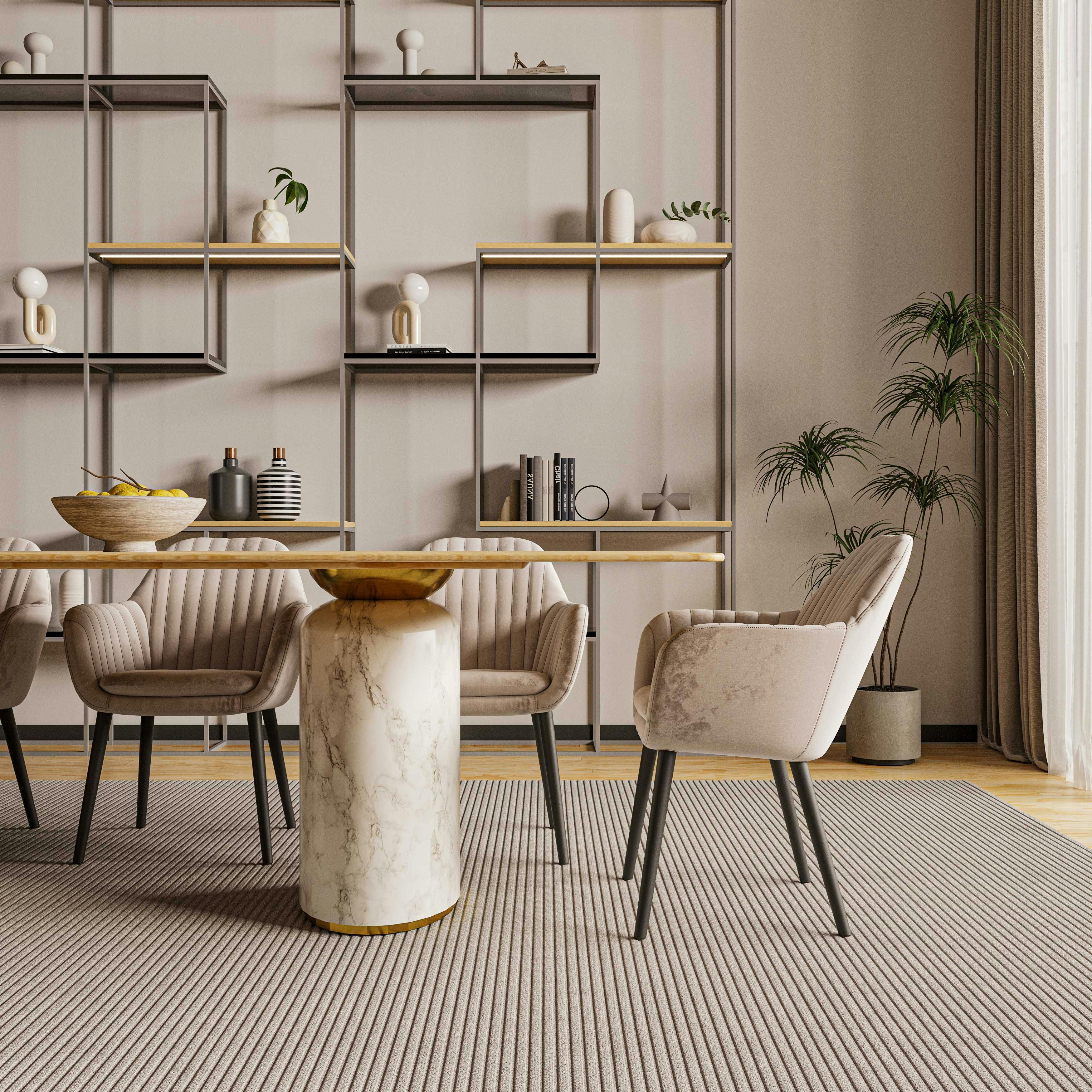
The kitchen is no longer just a workspace. It has become the most architecturally considered room in the house — a space where the line between furniture and architecture blurs, where materials are chosen for how they age rather than simply how they perform, and where the act of preparing a meal happens within something that could, without much exaggeration, be described as a work of art.
The shift has been building for years, but it has recently reached a point of clarity. Kitchens today are being designed with the same rigour and intentionality once reserved for living rooms and entrance halls. Appliances are hidden, surfaces are uninterrupted, and every detail — from the depth of a drawer pull to the radius of a countertop edge — is considered as part of a larger sculptural whole.
What sculptural actually means
When designers talk about sculptural kitchens, they are not describing rooms filled with curves for their own sake. Sculptural design is about form working in service of feeling. It is about a kitchen that communicates something — warmth, restraint, quiet confidence — before a single drawer is opened.
In practice, this might mean an island with a thick stone top and no visible base, appearing to float above the floor. It might mean cabinetry finished in a single limewashed plaster, with no handles and no visible hardware. Or it might mean a range hood custom-shaped to read as a piece of furniture in its own right rather than a practical afterthought above the cooktop.
The common thread is intention. Every element is placed deliberately, and nothing exists simply because it has always been there.
The materials doing the heavy lifting
Stone has always featured in kitchens, but the way it is being used has changed dramatically. Where marble was once laid in thin slabs and polished to a high sheen, today's most interesting kitchens use stone more generously. Thick benchtops with barely-there honed finishes. Rough-edge slabs that retain the character of the quarry. Stone bookmatched to create a continuous veining pattern across a full wall — a move that turns a splashback into something closer to a painting.
Alongside stone, limewashed plaster, raw concrete and unlacquered metals have become the materials of choice for anyone serious about this new direction. They share a quality that is fundamental to sculptural design: they are impermanent. They change. They develop a patina, absorb marks and memories, and become more interesting over time rather than less.
Travertine keeps appearing, its creamy tones and honeycomb texture surfacing in kitchen after kitchen because nothing else quite balances warmth with substance in the same way. Walnut cabinetry with flat-panel doors. Blackened steel frames. Brass tapware left to darken at its own pace. These are not trend choices. They are material commitments.
The disappearing kitchen
One of the defining gestures of the sculptural kitchen is concealment. Not in the sense of hiding things away — though appliances often are — but in the sense of creating an interior that reads as a unified composition rather than a collection of individual objects.
Integrated refrigerators and dishwashers allow cabinetry to run without interruption. Tapware sits flush with the benchtop. Even the sink, once a prominent feature, is increasingly submerged into the stone, its edge sanded smooth so that the transition from bench to basin is almost imperceptible.
The result is a kitchen that holds together visually in the way that a well-made piece of furniture does. You can appreciate it from across a room before you ever engage with it up close.
Designing in conversation with the rest of the home
What separates the most successful sculptural kitchens from their imitators is context. A kitchen designed as though it exists in isolation — all drama and texture with no conversation with the rooms around it — tends to feel overwrought. The best ones feel inevitable. Their materials echo the palette of the living space they open onto. Their scale is calibrated to the ceiling height and the quality of light.
This is harder to achieve than it sounds. It requires restraint — the willingness to do less, to let a single material or a single form carry the room rather than layering detail upon detail in search of character.
Where to begin
You do not need a full renovation to bring sculptural thinking into your kitchen. It starts with asking a different set of questions. Rather than asking what style you are going for, ask what you want this room to feel like. Rather than selecting finishes from a catalogue, consider how each material will behave over years of daily use.
Choose stone that has movement in it. Let your cabinetry be thicker than seems strictly necessary. Invest in hardware that feels substantial in the hand. And resist the urge to fill every surface. Emptiness, in a sculptural kitchen, is not a problem to be solved. It is part of the design.
The kitchen has always been the room where the most living happens. What has changed is our ambition for what it can look like while all that living unfolds.
Want to go further with colour?
The free Alira Colour Guide walks through each of these five questions in depth, with specific guidance on reading undertones, testing at scale, and building a whole-home palette. Delivered to your inbox immediately.