How to Layer Natural Materials
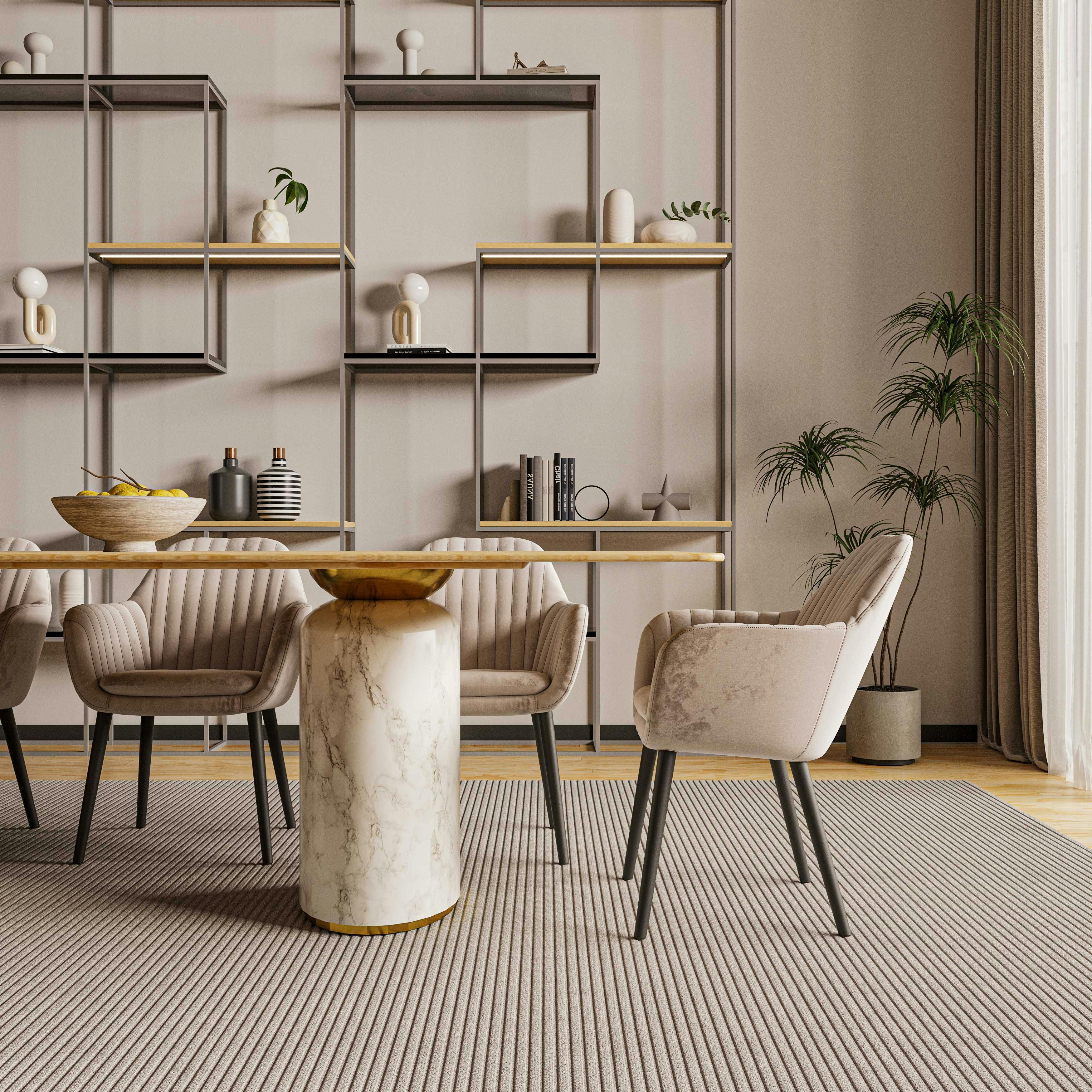
There is a particular quality that the most beautiful interiors share, and it is difficult to describe without sounding vague. A sense of depth. Of texture upon texture, warmth beside warmth. Of a room that invites you to stay — not because it is comfortable, though it usually is, but because it is genuinely interesting to be inside.
The rooms that achieve this quality almost invariably share one characteristic: they are built from natural materials, layered with patience and intention. Stone, timber, linen, leather, wool, clay. These are not merely decorative choices. They are the foundation of a room that will still feel alive in twenty years.
Learning to layer them well is one of the most valuable skills in interior design, and it is more accessible than it might first appear.
Start with what is fixed
Every room begins with its given elements — the flooring, the walls, the ceiling, the light. These are your foundation layer, and the decisions made here set the limits and possibilities for everything that follows.
In a home with existing timber floors, the layering begins with understanding what that timber is doing. Its tone, its texture, its warmth. Everything added to the room will be in conversation with it. A rug in the same tonal family will unify the space. A rug in a contrasting texture — rough jute against smooth timber, for instance — will add the productive tension that makes a room feel considered rather than merely coordinated.
If you are starting from scratch, the single most important decision you will make is your floor. It is the largest surface in the room and the one that will do more work than any other in establishing the material character of the space.
Working with a tonal range
One of the most common mistakes when layering natural materials is keeping everything too close in tone. The result is a room that feels cohesive but somehow flat, as though all the richness has been smoothed away in the name of harmony.
Effective layering works with a tonal range. Not contrast for contrast's sake, but a considered spread from light to dark that gives the eye somewhere to travel. In practice this might mean pale limestone floors, mid-tone walnut joinery and dark ebonised oak accents. Or bleached linen curtains against warm terracotta walls, with a deep leather sofa grounding the centre of the room.
The range does not need to be dramatic. Three or four tones, distributed with intention, is usually enough to bring a room to life.
Texture is where the real work happens
If tone is the structure of a layered room, texture is its character. And natural materials are remarkable in the variety they offer, even within a single palette.
Consider stone alone. Polished marble has an almost liquid stillness. Honed travertine is matte, warm, tactile. Rough-hewn sandstone carries the memory of the earth it came from. Each one feels entirely different in the hand, and each one brings something different to a room.
The principle to apply here is variation. Smooth beside rough. Dense beside airy. Hard beside soft. A concrete floor under a wool rug. A linen sofa in front of a timber-panelled wall. A leather bench at the foot of a bed made in washed cotton. Each pairing creates a conversation between surfaces, and those conversations are what give a room its depth.
Letting materials age together
One of the most underappreciated aspects of layering natural materials is what happens over time. Unlike synthetic finishes — which tend to degrade, scratching without gaining character, yellowing without gaining warmth — natural materials almost universally improve with age.
Timber deepens. Leather softens and develops a patina that tells the story of the life lived in it. Linen washes into something that feels like a second skin. Stone, especially when unsealed, absorbs light differently as the years pass.
Designing with this in mind changes the way you approach material selection. Rather than asking how something looks in the showroom, you ask how it will look in five years, in ten. You look for materials that are headed somewhere interesting, rather than materials that have already arrived at their best and can only decline from there.
The things that should not match
Perhaps the most counterintuitive advice when layering natural materials is this: resist the temptation to make everything match. A room where every element is in perfect coordination tends to feel like a stage set. Beautiful, perhaps, but uninhabited.
The rooms that feel most alive are those where there is a trace of the accumulated and the found. A timber table that came from somewhere else. A ceramic vase made by hand rather than produced to a specification. A rug discovered rather than selected.
These elements do not undermine a considered interior. They are what make it feel like it belongs to someone.
Where to begin
If you are starting to think about layering natural materials in your own home, the most useful thing you can do is slow down. Visit a stone yard and spend time with the slabs before choosing. Order timber samples and live with them for a week before committing. Bring fabrics home and hold them against the walls in different lights.
Natural materials reward this kind of attention. They reward slowness. And the rooms that result — built layer by layer, material by material, with genuine consideration — are the ones that will still feel right long after every trend has moved on.
Want to go further with colour?
The free Alira Colour Guide walks through each of these five questions in depth, with specific guidance on reading undertones, testing at scale, and building a whole-home palette. Delivered to your inbox immediately.